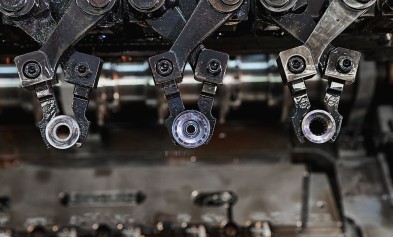
As automotive manufacturers accelerate the development of software-defined vehicles and automated driving technologies, SFS is actively engaged in projects supporting these systems. The Group contributes precision components for actuation and force transmission in fully electronic braking architectures.

Electromechanical Braking (EMB)
Electromechanical braking (EMB) represents the next evolution of vehicle braking, replacing conventional hydraulic systems with fully electronic brake-by-wire architectures. By combining advanced electronic control with precise electromechanical actuation, EMB systems enable faster response times and greater flexibility for future mobility concepts.
The Future of Braking: From Hydraulic Systems to Brake-by-Wire
Traditional braking systems rely on hydraulic pressure to transfer driver input into braking force. While these systems remain highly effective, future vehicle architectures require greater flexibility, integration and control.
Electromechanical braking systems replace hydraulic circuits with electronically controlled actuators that generate braking force directly at each wheel. This brake-by-wire approach enables precise electronic control of braking functions, making it particularly suitable for autonomous driving, advanced driver assistance systems (ADAS) and modern electric vehicle architectures.
SFS is actively involved in development projects for next-generation braking architectures, supplying high-precision components designed to meet the demanding requirements of modern electromechanical systems.
How Electromechanical Braking Works

Electromechanical braking systems use electronic signals to control braking force rather than relying on mechanical or hydraulic connections between the brake pedal and brake actuator.
A typical EMB system consists of:
- Electronic control units that interpret driver and vehicle inputs
- Electric actuators that generate braking force at each wheel
- Precision mechanical components that transmit forces efficiently and reliably
- Sensors and control systems that continuously monitor braking performance
This architecture enables independent control of each wheel, improving braking precision, vehicle stability and integration with automated driving functions.
Key Features of Electromechanical Braking Systems
SFS Supports the Future of Braking Technology

Electromechanical braking systems require highly reliable mechanical components capable of converting electrical energy into controlled braking force.
SFS provides precision-engineered components that support critical EMB functions, including:
- Actuation mechanisms
- Force transmission components
- Precision mechanical assemblies
- Components designed for high load capacity and durability
Through over a decade of advanced manufacturing expertise and close collaboration with automotive partners, SFS drives reliable and efficient brake-by-wire solutions for future vehicle generations.